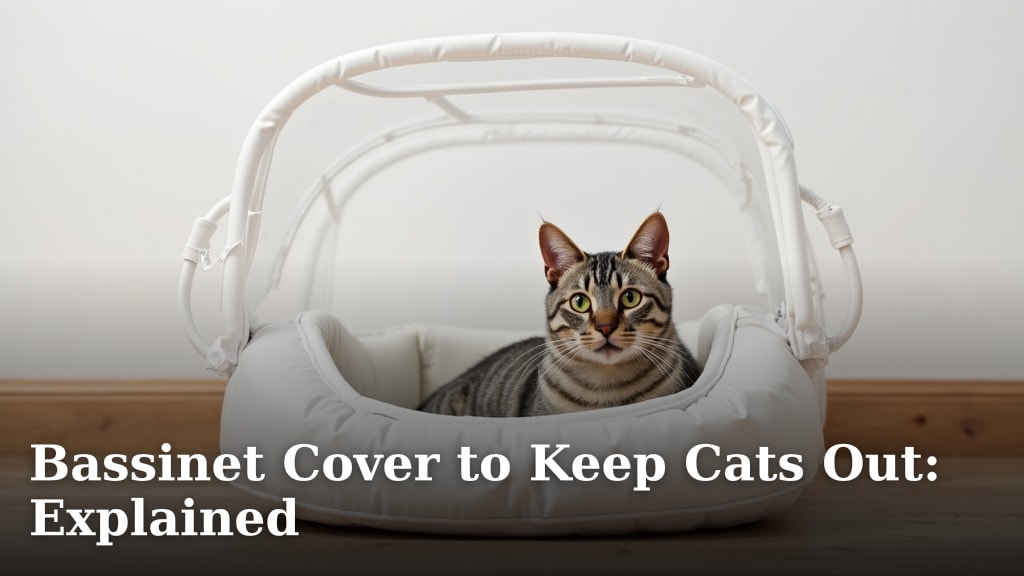
Bassinet Cover to Keep Cats Out: Explained
Yes, a fitted bassinet cover is a safe and effective way to keep curious cats out of your baby’s sleep space. It acts as a secure physical barrier that cats cannot easily push aside or scratch through.
We found that this simple solution provides peace of mind for parents. It protects your newborn from potential scratches, fur, and dander while the cat stays safely outside.
- A bassinet cover is a specially designed mesh or fabric enclosure for the top of the bassinet.
- Its main purpose is to create a cat-proof barrier that still allows airflow.
- Covers should fit snugly and meet all safety standards for infant sleep.
- They are an alternative to constantly shooing the cat away or closing doors.
- Installation is usually simple, often involving elastic edges.
Let’s walk through exactly how to choose and use the right cover to protect your little one’s sleeping area.
Understanding Bassinet Covers as a Cat Deterrent
Yes, a properly fitted bassinet cover is a reliable tool for keeping your cat out of the baby’s sleeping area. Think of it as a secure, breathable gate. The cover attaches to the top of the bassinet, creating a physical barrier that prevents your curious feline from climbing in. This barrier works while still allowing air to flow freely to your baby.
We found that this solution is recommended by many pediatric safety experts because it addresses the root problem: the open top. Instead of relying on training or vigilance alone, you create a safe, passive system. You can rest easier knowing the space is off-limits to paws and fur.
How the Cover Creates a Physical Barrier
The design is straightforward. A bassinet cover is usually made of a sturdy, fine-mesh fabric. It stretches over the bassinet’s top opening, much like a fitted sheet on a mattress. The material is strong enough that a cat cannot push through it with their head or paws.
The tension and secure fit are key. Cats test boundaries with their paws. A loose cover might be pushed aside, but a snug one won’t budge. Most covers use strong elastic bands or clips to lock onto the bassinet’s rim. This ensures the barrier stays put, even with a determined kitty investigating.
Why Mesh is the Preferred Material
You might wonder why not use a solid blanket. The answer is safety. Pediatric sleep guidelines from organizations like the American Academy of Pediatrics (AAP) stress the need for **unobstructed airflow** in a baby’s sleep space. Fine-weave mesh meets this need perfectly.
The holes in the mesh are tiny. They are far too small for a cat’s head or paw to get through. At the same time, they are large enough to allow for full visibility and constant air circulation. This material keeps your baby safe from both the cat and any risk of overheating.
Critical Safety Features You Must Check
Not all covers are created equal. Your top priority is safety, not just cat deterrence. Before you buy, you need to verify that the cover meets basic infant sleep safety standards. This is non-negotiable.
A cover should never compromise the safe sleep environment. It must be compatible with your specific bassinet model. An ill-fitting cover is a hazard. Always follow the manufacturer’s guidelines for your bassinet and the cover itself.
Snug Fit and Secure Attachment
The cover must fit like a glove. There should be **no gaps** between the cover’s edge and the bassinet rim. A cat could exploit a loose edge to pry the cover up. The attachment mechanism—whether elastic, Velcro, or clips—must be secure and out of your reach.
Place the bassinet in a location where the baby cannot reach the edges where the cover attaches. This prevents little hands from pulling on it. A proper fit also means the cover lies flat over the opening, with no sagging pockets that could pose a risk.
Breathability and Visibility
The primary safety feature is **breathability**. The mesh must allow for free air exchange. This prevents any risk of CO2 rebreathing and helps regulate temperature. You should be able to see your baby clearly through the cover from any angle.
Visibility goes both ways. It lets you monitor your baby easily. It also helps your baby see the room, which can be calming. We found that a transparent mesh is far safer and more practical than any opaque material.
Choosing the Right Material for Your Cover
The material determines durability, cleaning ease, and safety. You’ll typically encounter two main options. Each has pros and cons that relate to your lifestyle and your cat’s behavior.
The goal is a material that is strong, washable, and non-toxic. It will be near your baby’s breathing space, so it must be free of harmful chemicals. Look for covers made from **polyester mesh** or similar synthetics designed for infant products.
| Material Type | Pros | Cons & Considerations |
|---|---|---|
| Fine-Weave Polyester Mesh | Extremely durable. Resists claws. Easy to wipe clean. Excellent airflow. Non-absorbent. | Can be slightly less breathable than organic cotton. Must be checked for quality stitching. |
| Organic Cotton Mesh | Soft, natural material. Often very breathable. May be preferred for allergy concerns. | Can be less resistant to sharp claws. May require more careful washing. Check for loose threads. |
| Knitted or Crocheted Covers | Aesthetically pleasing, handmade look. | Generally not recommended. The holes are often too large. The material can stretch and sag, creating entanglement risks. |
Installation and Daily Use Tips
Setting up the cover correctly is as important as choosing the right one. Always install it when the bassinet is empty. Follow the included instructions step by step. Give it a gentle tug after installation to ensure it’s secure.
Make checking the cover a part of your daily routine. Quickly inspect the attachment points when you place your baby down for a nap. Look for any signs of wear, stretching, or damage from your cat’s claws. A damaged cover should be replaced immediately.
The Bassinet Placement Strategy
Where you put the bassinet can help the cover work even better. Place it in an open area of your bedroom. Avoid corners where your cat might leap from nearby furniture onto the bassinet.
A clear perimeter makes the cover the only point of access. It also removes the “launchpad” advantage for your agile cat. This simple setup reduces temptation and makes the cover more effective.
Working With Your Cat’s Natural Instincts
A cover doesn’t stop your cat from being curious. You can help by providing an even better alternative. We found that placing a cozy cat bed near the bassinet—but at a safe distance—can redirect their interest.
Never punish your cat for approaching the bassinet. Instead, use positive reinforcement. Reward them for using their own bed. This cooperation, combined with the physical barrier, creates a complete solution.
When a Cover Might Not Be Enough
In most cases, a secure cover is sufficient. However, if your cat is exceptionally persistent or strong, you may need a multi-layered approach. The cover remains the cornerstone, but you can add other gentle deterrents.
The goal is to make the bassinet area less appealing, not to restrict your cat’s entire home life. You want to guide their behavior without causing stress.
Complementary Deterrents to Consider
A motion-activated pet deterrent that emits a puff of air or sound can provide a gentle, harmless reminder. Place it on the floor near the bassinet. It works alongside the cover by discouraging lingering.
Double-sided sticky tape on the floor around the bassinet can also deter cats, as they dislike the sticky feeling on their paws. These methods support the main barrier the cover provides.
Your Bassinet Cover Selection Checklist
Ready to choose a cover? Use this simple checklist to make sure you get a safe, effective product for your home.
- Safety Certification: Does it meet CPSC or ASTM standards for infant sleep accessories?
- Perfect Fit: Is it designed specifically for your bassinet’s model and dimensions?
- Secure Attachment: Does it use strong elastic or clips to stay firmly in place?
- Breathable Mesh: Is the material fine-weave mesh that allows clear visibility and airflow?
- Durable Material: Is it made from sturdy polyester or similar fabric that resists stretching?
- Easy to Clean: Can it be machine-washed or easily wiped down?
Taking a moment to verify these points will ensure you find a cover that gives you true peace of mind. It’s a small investment for a big upgrade in safety and comfort for your entire family, furry members included.
Conclusion
A fitted bassinet cover is your best tool for keeping cats safely out of your baby’s sleep space. It provides a secure, breathable barrier that fits snugly to prevent paws and fur from getting in. Remember to prioritize safety by choosing a cover with fine mesh, a tight fit, and compatibility with your bassinet model. As a final step, use the selection checklist provided to verify all safety features before you make a purchase. This simple check ensures you get a product that offers true peace of mind for your entire family.
Frequently Asked Questions
Can I use a bassinet cover if my cat is very persistent?
We recommend pairing the cover with gentle deterrents like double-sided tape or motion-activated devices. This layered approach reinforces the barrier and makes the area less appealing, without causing stress to your cat.
How often should I check the bassinet cover for wear and tear?
Make it a daily habit to inspect the cover before each use. Look for any signs of stretching, loose stitching, or damage from claws, and replace it immediately if you find any issues.
Will a bassinet cover make my baby too hot?
No, a proper cover made of breathable mesh allows air to circulate freely. This design helps regulate temperature and prevents overheating, keeping your baby comfortable and safe during sleep.
Is it safe to wash the bassinet cover in a machine?
Most polyester mesh covers are machine-washable, but always check the manufacturer’s care instructions first. Use a gentle cycle and mild detergent to preserve the material’s safety and durability.
Can I attach the cover to any type of bassinet?
No, covers are designed for specific bassinet models. Always ensure the cover matches your bassinet’s dimensions and follows the manufacturer’s guidelines for a secure, gap-free fit.