Changing Table vs Dresser: Which Should You Choose? (November 2026)
Pick a dedicated changing table for a railed, pad-included surface and a dresser for closed storage that lasts longer. In a changing table vs dresser choice, the pad, rails and drawer depth matter more than the label on the front.
On this page (10 sections)
- Changing table vs dresser: the quick verdict
- The two sides side by side
- Storage: open shelves vs closed drawers
- Safety rails, belts and straps
- Size and room fit
- Pads and clean-up
- Assembly, weight and moving the piece
- How long will you keep using it?
- Who should buy which?
- The verdict on changing table vs dresser
Pick a dedicated changing table for a railed, pad-included surface and a dresser for closed storage that lasts longer. In a changing table vs dresser choice, the pad, rails and drawer depth matter more than the label on the front.
A dedicated table gives you a raised changing area, a pad in the box and open shelves within reach. A dresser gives you drawers that hide clothes and can still be useful after the diaper stage ends.
We checked the specs for four pieces that cover both sides of that choice.
Our score weighs specs, features and buyer feedback against what you are shopping for. Scores use the same scale across the site, so one product keeps its score in every post.
Use the table below to compare size, storage and pad first, then read the sections that decide the choice for your room.
 Best for a classic dedicated changing table
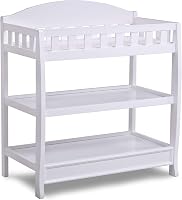
Delta Children Eclipse Changing Table with Changing Pad
 Best for enclosed four-side rails
Delta Children Infant Changing Table with Pad
Changing table vs dresser: the quick verdict
Choose a changing table for safety rails and a ready pad, and choose a dresser for drawers and longer use. The Delta Children Eclipse and Infant tables include pads, belts or straps and rails.
The BOLUO and YeTom dressers give you six drawers each, but the BOLUO pad is not included.
If you have a clear nursery wall and want a station that is ready on day one, a dedicated table is the simpler pick. If you need hidden storage for clothes and want one piece to stay in the room for years, a dresser is the stronger pick.
Our baby changing table guide explains how dedicated tables are built, so you can compare that design with a dresser top.
The rest of this post breaks down the trade-offs by storage, safety, size and cost of care. Use your wall space, your storage habits and how long you plan to keep the piece as the deciding factors.
The two sides side by side
The dedicated tables are narrower and railed, while the dressers are wider and built around drawers. That one split explains most of the differences in daily use.
A narrow table fits beside a crib, while a wide dresser can act as a second storage unit for the room.
| Feature | Dedicated changing tables | Changing dressers |
|---|---|---|
| Width | About 35 in | About 43 in |
| Top | Railed pad area | Flat wide top |
| Storage | Open shelves | Drawers plus shelves |
| Pad | Included on all 3 tables here | Included on YeTom, not on BOLUO |
| After diaper stage | Limited use | Dresser use continues |
The Delta Children Eclipse measures 35.25 in wide by 21.50 in deep by 36.75 in high. The Delta Children Infant measures 35 in wide by 19.75 in deep by 39.25 in high.
The BOLUO measures 43.7 in wide by 19.7 in deep by 37.2 in high. The YeTom measures 43.3 in wide by 16.7 in deep by 40.5 in high.
Our best changing table topper guide helps if you already own a dresser and want to add a fitted top instead of buying a full table. That option can close the gap between the two sides, but it adds a separate purchase.
Storage: open shelves vs closed drawers
Open shelves keep diapers in sight, while drawers hide clothes and cut visual clutter. Neither style is better for every parent, so think about what you will store and how often you will reach for it.
Diapers, wipes and cream stay handy on open shelves, and folded clothes stay cleaner in drawers.
Both Delta Children tables have two open shelves under the changing area. That layout works well for a small set of daily supplies, like one stack of diapers and a pack of wipes.
It works less well if you also need room for onesies, sleepers and blankets in the same piece.
The BOLUO has six fabric drawers and three open shelves. The YeTom has six drawers and an adjustable open shelf.
Drawers let you sort by size or season, and you can close them to keep the room looking tidy. The YeTom maker says its drawers can hold more than 300 diapers, plus onesies and creams, which shows how drawer volume compares with two open shelves.
If your nursery already has a closet or a separate dresser, open shelves may be enough for changing supplies. If this piece is your main storage, drawers are the safer choice.
A changing table topper pad can help you plan the top surface, but it will not add drawer space below.
Safety rails, belts and straps
Rails and a belt or strap help you keep a baby in place while you reach for supplies. A dedicated table is built around that idea, while a dresser top is built around a flat surface.
You should never leave a baby alone on any changing surface, even a railed one.
The Eclipse has top safety rails and a safety belt, plus a changing pad. The Infant table has safety rails on all four sides and a changing pad with a strap.
Its pad measures 33 in wide by 16 in deep by 1 in high, so it fills most of the top and leaves a clear edge around it.
The YeTom has safety baffles on four sides and a safety lanyard, and its pad is made of waterproof PVC. The BOLUO has a large flat top with no rails in its design.
That flat top is fine for a dresser, but it means you must keep one hand on your baby and keep the pad from sliding.
If you choose a dresser, add a pad that fits the top and use it every time. Our best changing pad for dresser guide explains how to match pad size to a dresser top.
Also check that the dresser is stable, level and secured to the wall if the maker asks for that step.
Size and room fit
Measure width, depth and standing space before you choose, since dressers need about 8 more inches of wall. A dedicated table can fit in a narrow gap, while a dresser needs a full wall section.
Depth matters too, because you need room to stand close to the pad.
The Delta Children tables are 35 in wide, so they can sit beside many cribs without taking over the wall. The BOLUO is 43.7 in wide and the YeTom is 43.3 in wide, so both need a wider clear space.
The YeTom is the shallowest at 16.7 in deep, which can help in a tight room, while the Eclipse is the deepest at 21.5 in.
Height also changes how you work. The Eclipse stands 36.75 in high, the Infant stands 39.25 in high, the BOLUO stands 37.2 in high and the YeTom stands 40.5 in high.
A taller top may suit a taller parent, but you should still be able to reach the far side of the pad without leaning over your baby.
Use painter's tape on the wall to mark the full width, then stand in front of it with your arms in a changing position. If a corner nook is your only option, a corner baby changing table may fit better than a straight dresser.
Measure door swings and closet doors too, since a dresser drawer needs clear room to open.
Pads and clean-up
A waterproof, wipeable pad matters more than the shape of the furniture below it. You will use the pad many times each day, so choose a surface you can clean fast.
Waterproof material helps when a change gets messy, and a strap or raised edge helps keep the pad in place. Compare our best baby changing pads for more options.
The Eclipse includes a changing pad and can be wiped clean with a damp cloth. The Infant includes a water resistant changing pad with a safety strap.
The YeTom pad is made of waterproof PVC, which is easy to wipe clean. The BOLUO does not include a pad, so you must buy one that matches its 43.7 in wide top.
For a dresser, a pad that is too small can slide, and a pad that is too large can hang over the edge. Measure the top in both directions before you order.
If you want a clear, fitted surface, an acrylic changing table topper may suit a flat dresser top, but check the size and the maker's weight limits first.
Wipe clean-up should be part of your daily routine. Keep wipes, a spare cover or a waterproof liner close by, and wash or replace the pad cover as the maker directs.
A pad that is cracked, torn or no longer fits flat should be replaced.
Assembly, weight and moving the piece
Dedicated tables are lighter to move, while dressers with wheels are easier to shift once built. Assembly time and weight affect how you get the piece into the nursery and whether you can move it later.
Check the delivery route before the piece arrives.
The Eclipse needs some assembly. The Infant table includes all tools for assembly.
The BOLUO is described as easy to assemble and lightweight, with four adjustable feet to protect the floor. The YeTom comes with detailed instructions and all hardware, and the maker says it can be assembled in 15 to 20 minutes without help.
Weight also matters for moving. The BOLUO weighs 45.9 pounds and the YeTom weighs 28 pounds.
The YeTom has four removable universal wheels with safety locks, so you can move it from room to room and then lock the wheels for stable use. The BOLUO has adjustable feet, which help with level floors but not with rolling it across the house.
If you rent or move often, wheels can be a real help. If you plan to keep the piece in one spot, lockable wheels may still help you clean under it.
Leave the wheels locked whenever you use the top for a change.
How long will you keep using it?
A dresser usually stays useful longer, while a dedicated table is built for the diaper stage. That difference affects value if you plan to keep the piece in the room for several years.
Drawers can hold clothes, toys and blankets long after the pad is gone.
The BOLUO has a removable changing top, so you can take the top apart when you no longer need it and use it as a six drawer dresser. The YeTom keeps its changing function as part of a six drawer dresser with an adjustable shelf, so it can still store nursery items after changes end.
The Delta Children tables have open shelves that are best for diaper supplies, not for long term clothing storage.
Think about the room after the first year. If the nursery will become a toddler room, drawers for clothes and pajamas will still be needed.
If you already have a dresser elsewhere, a dedicated table may be all you need for the changing station.
Our how to choose a bassinet guide is a useful reminder that nursery furniture should fit the whole room plan. Plan the crib, the changing station and the storage as one set, not as separate buys.
That habit helps you avoid a piece that duplicates storage you already have.
Who should buy which?
Buy a dedicated table for a railed, ready-to-use station and a dresser for drawers and longer use. Your storage needs and wall space should make the choice clear.
The four products here map to four clear buyer types.
Choose the Delta Children Eclipse if you want a classic white table with rails, a belt and two shelves. It suits a nursery where open storage is enough and you like a traditional look.
Choose the Delta Children Infant if you want rails on all four sides and a pad with a strap in a grey finish.
Choose the BOLUO if you want six deep drawers, three open shelves and a removable top. It suits a first nursery where the dresser will stay in the room for years.
Choose the YeTom if you want six drawers, an adjustable shelf and wheels, so you can move the station between rooms.
If you travel often, a best portable changing pad can cover cars, strollers and stays at family homes. That does not replace a home station, but it can reduce the need for a second full piece of furniture.
Keep the home station in the room where you change most often.
The verdict on changing table vs dresser
Pick the Eclipse or Infant table for rails and a pad in the box, and pick the BOLUO or YeTom dresser for drawers that last. In this changing table vs dresser comparison, the right answer depends on storage first and safety features second.
Neither side wins on every point.
If your nursery has a narrow wall and you already have closed storage elsewhere, a dedicated table is the clean choice. The Eclipse scores 9.7 for its rails, belt and included pad, and the Infant scores 9.6 for its four side rails and strap.
Both are ready for diaper changes without a separate pad purchase.
If you need one piece to store clothes and serve as a changing station, a dresser is the better long term buy. The BOLUO scores 9.4 for its six drawers and removable top, but you must add a pad.
The YeTom scores 9.1 for its drawers, adjustable shelf and wheels, with a waterproof pad included.
Measure your wall, check the pad size and decide how long you want to keep the piece. That simple order will point you to the right side of this changing table vs dresser choice.
Start with the baby changing table guide if you lean toward a dedicated table, or with a dresser pad guide if you lean toward a dresser.
Frequently asked questions
Is a changing table or a dresser better for a small nursery?
A dedicated changing table is often better in a small nursery because it is narrower and built for one task. The Delta Children tables are about 35 inches wide, while the dressers here are over 43 inches wide.
Measure your wall first, then leave room to stand and open storage.
Can I use a dresser as a changing table?
Yes, you can use a dresser as a changing table if the top is flat, wide enough and stable, and you add a pad that fits the surface. Both dressers here have wide tops, but the BOLUO pad is not included.
A separate pad with a strap or raised edges helps keep supplies in place.
Do I need a pad on a changing table vs dresser?
A pad adds a soft, wipeable layer and helps you keep the top clean during frequent changes. The Delta Children tables and the YeTom include a pad, while the BOLUO does not.
If you add a pad to a dresser, check that it fits the top and does not hang over the edge.
Which lasts longer after the diaper stage?
A dresser usually lasts longer because its drawers can hold clothes, blankets and toys after changes end. The BOLUO top is removable, so it can become a six drawer dresser.
A dedicated changing table is built for diaper changes, so its shelves are less useful for folded clothes later.
Are rails needed on a changing surface?
Rails and a belt can help you keep a baby positioned while you use one hand to hold supplies. Both Delta Children tables have rails, and the Infant model has rails on all four sides.
A dresser top usually has no rails, so you need to stay close and keep one hand on your baby.