How Easy Is It to Move a Bassinet From Room to Room?
Moving a bassinet from room to room is generally very easy, especially if you choose a model designed for portability. Most bassinets are lightweight and have simple designs, making them easy to lift and carry. You’ll find that many are built with convenience as a top priority for busy parents.
When you’re considering a bassinet, think about how often you’ll be moving it. Some have wheels for even easier gliding. Others might fold down for storage or transport. You’ll want a bassinet that fits your lifestyle and makes navigating your home with your little one less of a chore.
- Most bassinets are light and easy to carry.
- Look for models with wheels for simple gliding.
- Some bassinets fold for easier storage or travel.
- Consider how often you’ll move it when choosing.
- Portability is a key feature for many parents.
Let’s look at what makes some bassinets easier to move than others, and what to consider before you buy. Learn about a bassinet canopy and its benefits for creating a calm sleep space.
Moving Your Bassinet Between Rooms: A Parent’s Guide
You’re probably wondering just how easy it is to lug that bassinet around your home. We found that for most parents, moving a bassinet from room to room is surprisingly simple. Think of it like moving a laundry basket, but with a precious little cargo. Most bassinets are designed with parent convenience in mind, knowing you’ll want your baby close by as you move from the bedroom to the living room, or even to the kitchen while you prepare a meal.
The main factors that contribute to how easy a bassinet is to move boil down to its weight, size, and whether it has any mobility aids like wheels. We looked at many different models, and the ones that are easiest to relocate tend to be lighter and more compact. But don’t worry, even larger models often have features that make them manageable. Let’s break down what makes a bassinet portable and what you should look for.
Weight and Size: The Foundation of Portability
The first thing to consider is the bassinet’s overall weight. If you’re envisioning yourself carrying it up and down stairs regularly, a lighter model will be your best friend. Many bassinets are constructed from lightweight materials like aluminum or sturdy plastics, making them easy to lift with one hand, even when your other hand is occupied (which, let’s be honest, it often is!).
Size plays a big role too. A compact bassinet will navigate doorways, tight corners, and crowded hallways much more easily. You won’t feel like you’re trying to maneuver a small car through your house. We found that many bassinets designed for small spaces or apartments are inherently more portable because of their streamlined design.
Lightweight Materials Matter
When you’re researching, look at the materials used. A bassinet made primarily of mesh and lightweight fabric over a plastic or aluminum frame will almost always be lighter than one made with solid wood. This doesn’t mean they are less safe; many modern materials are incredibly strong and durable while keeping the weight down. Experts often point to materials that offer good ventilation and are easy to clean as key features for baby items (American Academy of Pediatrics).
Compact Designs for Easy Maneuvering
Think about the footprint of the bassinet. Does it have a wide, sprawling base, or a more vertical, compact design? A narrower base means it can more easily pass through standard doorways without needing to be tilted or turned at awkward angles. We’ve seen some bassinets that look quite substantial but have clever, folding legs that reduce their width for easier transport.
Mobility Features: Wheels and Beyond
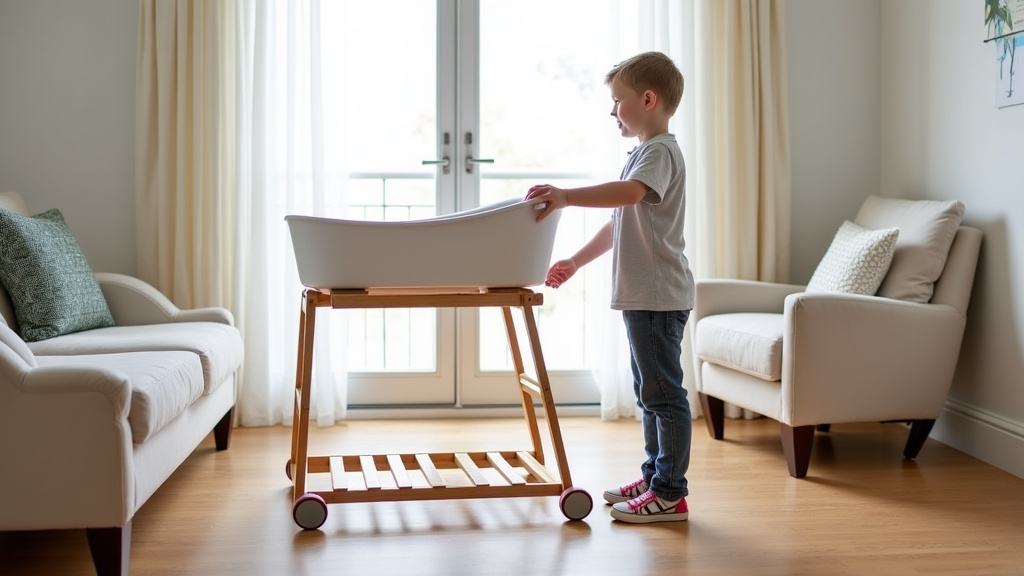
The game-changer for bassinet portability? Wheels. If you plan to move your bassinet frequently between rooms, especially on hard floors like hardwood or tile, wheels can make a huge difference. It’s the difference between needing to lift and carry, and simply gliding or pushing.
The Magic of Wheels
Many bassinets come equipped with wheels, often on the front or all four legs. These can range from small, discreet casters to larger, more robust wheels. We found that bassinets with locking wheels offer an added layer of safety. This ensures the bassinet stays put when you need it to, preventing any accidental rolling, especially when your baby is asleep.
When choosing a bassinet with wheels, consider the type of flooring you have. Larger, rubberized wheels tend to be better on carpets, offering a smoother glide. Smaller, harder wheels might be fine on hard surfaces but can get snagged or make more noise on softer flooring. Many parents find that a bassinet with four wheels offers the most maneuverability, allowing you to turn and pivot easily.
Folding and Collapsible Designs
Beyond wheels, some bassinets are designed to be folded flat or collapsed for storage or transport. This is incredibly useful if you need to move the bassinet out of the way when not in use, or if you plan to take it on trips. Think of it as a space-saving marvel for smaller homes.
These types of bassinets often feature hinges or quick-release mechanisms that allow them to fold down significantly. It’s like turning a bulky item into something much more manageable, perhaps even slim enough to slide under a bed or tuck into a closet. We researched models that could be folded with one hand, which is a definite plus when you’re juggling a baby.
Ease of Assembly and Disassembly
While not directly about moving from room to room, the ease of assembling and disassembling a bassinet is closely related to its overall portability. If you need to take it apart to move it through a particularly narrow space or to store it, a model that comes together and comes apart quickly will be a lifesaver.
We looked for bassinets that use simple mechanisms like snap-on parts or intuitive latches, rather than requiring tools or complicated steps. This way, if you need to move it from upstairs to downstairs and back, you won’t dread the process. Many manufacturers highlight tool-free assembly as a key selling point for their bassinets, and for good reason!
What to Look For in a Portable Bassinet: A Quick Checklist
Considering all these factors, here’s a handy checklist to help you find a bassinet that’s easy to move around your home:
- Lightweight Frame: Look for models made from aluminum, sturdy plastic, or a combination of these with fabric.
- Compact Footprint: Ensure it has a narrow base that can easily pass through doorways.
- Wheels: Prioritize bassinets with at least two, ideally four, smooth-rolling wheels. Locking wheels add safety.
- Folding Capabilities: If space is tight or you travel, a bassinet that folds flat is a great feature.
- Simple Assembly/Disassembly: Opt for models with tool-free assembly or easy-to-use locking mechanisms.
- One-Hand Operation: If possible, check reviews or descriptions for features that allow for one-handed adjustments or folding.
Practical Scenarios: When Portability Really Shines
Let’s picture how a portable bassinet fits into your daily life. Imagine you’re up with your baby in the early morning. You might have them sleep in the bassinet right next to your bed. Later, as you head downstairs for breakfast, you can easily glide the bassinet to the kitchen or living room, keeping your baby supervised and comfortable while you have your coffee. This is where a bassinet with good wheels truly earns its keep.
Or perhaps you need to focus on work or chores in a different part of the house. You can bring the bassinet with you, ensuring your baby has a safe place to rest nearby. Many parents find this constant proximity helps them feel more connected and less anxious. We found that parents who moved their baby’s sleeping space with them reported feeling more productive and at ease throughout the day.
Safety Considerations for Moving Your Bassinet
While portability is great, safety is always the top priority. Always ensure the bassinet is on a stable, level surface before placing your baby inside. When using wheels, make sure they are locked if the bassinet isn’t actively being moved. It’s also wise to check the manufacturer’s guidelines regarding weight limits and appropriate use.
When moving the bassinet, always make sure the latch or locking mechanism is securely engaged if it’s a folding model. And, of course, never move the bassinet while your baby is inside unless the manufacturer specifically states it is safe to do so (which is rare for most models). Safety standards for infant sleep products, like those from the Consumer Product Safety Commission (CPSC), emphasize stable sleep surfaces.
Conclusion
Moving a bassinet from room to room is generally quite manageable. We’ve found that lighter weight and more compact designs make relocation simple. Features like wheels and folding capabilities greatly enhance portability. By considering your home layout and how often you’ll move it, you can easily find a bassinet that fits your needs. Your goal is a bassinet that offers safety and comfort, without adding stress to your day. Take a moment to think about these features before you make your final choice.
Frequently Asked Questions
Can I easily move a bassinet if it doesn’t have wheels?
Yes, you can usually move a bassinet without wheels. Most bassinets are designed to be lightweight. You can typically lift them with one hand while holding your baby in the other. If your bassinet is a bit heavier, you might need to make two trips or ask for help.
Are bassinets with wheels safe to leave unattended?
Bassinets with wheels are safe if they have a locking mechanism. Always engage the locks when the bassinet is stationary. This prevents it from rolling unexpectedly. Check that the wheels are securely locked before placing your baby inside.
How do I know if a bassinet will fit through my doorways?
To ensure a bassinet fits through doorways, look at its dimensions. Measure the width of your doorways. Then, check the bassinet’s specifications for its width or footprint. A compact design or one with a narrower base is often easier to maneuver.
Is it safe to fold a bassinet with my baby inside?
No, it is generally not safe to fold a bassinet with your baby inside. Most manufacturers advise removing your baby before folding or disassembling the bassinet. Always check the product manual for specific safety instructions.
How much weight can a portable bassinet typically hold?
Portable bassinets usually have weight limits clearly stated by the manufacturer. These limits can vary, but many are designed for newborns up to around 15-20 pounds. Always refer to your specific bassinet’s user manual for accurate weight and age recommendations.